
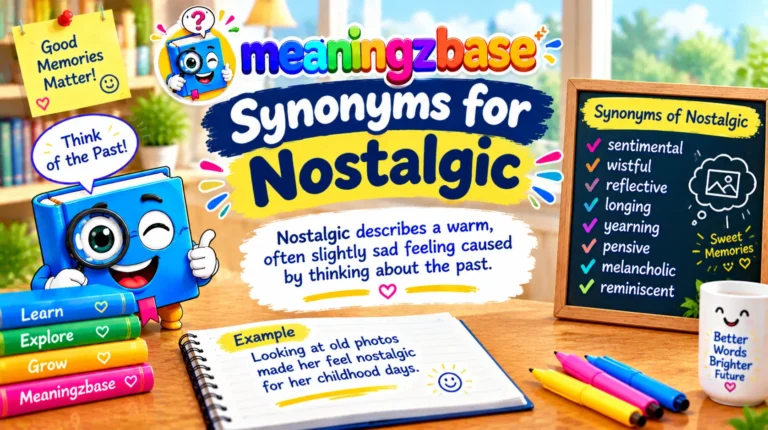
People often search for synonyms of nostalgic because the word “nostalgic” does not always express the exact feeling they want.
Sometimes a person feels warm when remembering childhood. At other times, they miss an old friend, a past home, a former time, or a special moment.
Different words can describe these feelings more clearly.
Using the right synonym also makes writing more varied. Repeating “nostalgic” many times can make an article, essay, story, or conversation sound flat.
A well-chosen alternative can add warmth, sadness, affection, or a sense of longing.
These words are useful in many settings. Students may need them in essays or IELTS writing.
Professionals may use them when describing old brands, past trends, or customer experiences.
In casual speech, people often need simple words to explain why an old song, photo, place, or memory feels special.
The key is not to replace “nostalgic” with any word that looks similar. Each alternative carries its own meaning and emotional weight.
Some are warm and happy, while others suggest sadness or a strong desire for something from the past.
Below is a practical guide to the best synonyms of nostalgic, including stronger choices, softer alternatives, academic vocabulary, and words that can cause confusion.
What Does “Nostalgic” Mean?
Nostalgic describes a warm, often slightly sad feeling caused by thinking about the past.
It is commonly used when someone remembers a happy period, person, place, activity, or experience from earlier in life. The feeling may be pleasant because the memory is special, but it can also contain some sadness because that time is gone.
For example:
I felt nostalgic when I heard the song I used to play in school.
The word can describe both people and things:
- A nostalgic person misses or thinks warmly about the past.
- A nostalgic memory brings back feelings from an earlier time.
- A nostalgic song reminds people of a particular period.
- A nostalgic movie creates a strong sense of the past.
“Nostalgic” is common in everyday English, creative writing, reviews, advertising, and academic discussion. Its tone is usually emotional but not extremely sad.
15+ Best Synonyms for “Nostalgic”
1. Sentimental
Definition: Showing strong emotional feelings about people, places, objects, or memories.
Tone: Casual / Literary
Example:
She became sentimental while looking through her old school photographs.
“Sentimental” is one of the closest alternatives to “nostalgic,” but it can describe emotion about something in the present as well as the past.
2. Reminiscent
Definition: Bringing a past person, place, event, or feeling back to your mind.
Tone: Formal / Literary
Example:
The old wooden house was reminiscent of my grandparents’ home.
“Reminiscent” is especially useful when one thing reminds you of another.
3. Reflective
Definition: Thinking carefully about past experiences, events, or feelings.
Tone: Formal / Academic
Example:
He became reflective when he talked about his childhood.
This word focuses more on thoughtful thinking than emotional longing.
4. Wistful
Definition: Showing a gentle feeling of sadness or longing for something that is gone or difficult to have.
Tone: Literary
Example:
She gave a wistful smile when she remembered her old friends.
“Wistful” is a strong choice when nostalgia has a quiet, sad side.
5. Longing
Definition: A strong desire for something that you no longer have or cannot easily reach.
Tone: Literary / Formal
Example:
He felt a deep longing for the simple life he had as a child.
Unlike “nostalgic,” longing can be directed toward the future or something never experienced.
6. Yearning
Definition: A deep and powerful desire for someone, something, or a past experience.
Tone: Literary / Formal
Example:
She felt a strong yearning for the peaceful days of her youth.
“Yearning” is more intense than ordinary nostalgia.
7. Homesick
Definition: Sad because you are away from your home or familiar surroundings.
Tone: Casual
Example:
After several months abroad, he became homesick for his hometown.
Use “homesick” only when separation from home is central to the feeling.
8. Reminiscent of the Past
Definition: Something that strongly brings memories of an earlier time.
Tone: Formal / Literary
Example:
The small café was reminiscent of the town we visited years ago.
This phrase is useful when describing places, sounds, smells, designs, and objects.
9. Retrospective
Definition: Looking back at past events or experiences.
Tone: Formal / Academic
Example:
The documentary offered a retrospective view of the artist’s career.
“Retrospective” is usually more analytical than emotional.
10. Memory-Laden
Definition: Full of memories or connected with many past experiences.
Tone: Literary
Example:
The memory-laden house brought back many moments from her childhood.
This is useful in descriptive and creative writing.
11. Evocative
Definition: Causing a strong memory, image, emotion, or feeling.
Tone: Formal / Literary
Example:
The smell of fresh bread was evocative of his grandmother’s kitchen.
“Evocative” does not always mean nostalgic, but it is excellent when something triggers a past memory.
12. Reminiscent
Definition: Similar to something from the past or likely to make someone remember it.
Tone: Formal / Literary
Example:
The music was reminiscent of the songs my parents enjoyed.
This is especially useful for describing styles, sounds, images, and designs.
13. Pensive
Definition: Quietly thoughtful, often while thinking about personal experiences.
Tone: Formal / Literary
Example:
He looked pensive as he remembered his years at university.
“Pensive” does not specifically mean nostalgic, so use it when thoughtful reflection is the main idea.
14. Reflective of Earlier Times
Definition: Showing features or qualities associated with the past.
Tone: Academic / Formal
Example:
The building’s design is reflective of earlier times.
This phrase works well in essays about history, culture, art, and architecture.
15. Old-Fashioned
Definition: Connected with an earlier style, custom, or period.
Tone: Casual
Example:
The restaurant has an old-fashioned charm that reminds visitors of another era.
“Old-fashioned” usually describes something rather than the emotion a person feels.
16. Vintage
Definition: Representing or associated with a past period, especially in style or design.
Tone: Casual / Literary
Example:
The vintage posters gave the room a warm feeling from another era.
“Vintage” often describes objects, clothing, music, design, and style.
17. Bygone
Definition: Belonging to an earlier time that has ended.
Tone: Literary / Formal
Example:
The museum gives visitors a glimpse into a bygone era.
This word is excellent for historical writing.
18. Reminiscing
Definition: Talking or thinking about pleasant experiences from the past.
Tone: Casual
Example:
We spent the evening reminiscing about our school days.
“Reminiscing” describes the action rather than the feeling itself.
19. Reflective of the Past
Definition: Showing or suggesting qualities associated with an earlier period.
Tone: Academic / Formal
Example:
The artwork is reflective of the past and its changing social values.
This phrase works well in formal essays and analysis.
20. Memory-Provoking
Definition: Causing someone to remember an earlier experience.
Tone: Formal / Casual
Example:
The familiar song was memory-provoking for everyone in the room.
It is useful when the focus is on something that triggers memories.
Stronger Alternatives
Sometimes “nostalgic” is too mild. If the feeling is powerful, these alternatives can communicate greater emotional force.
Deeply Sentimental
Use this when a memory carries strong emotional value.
Example:
The letter was deeply sentimental because it came from her late grandfather.
Intense Longing
Use this when someone strongly wishes to return to an earlier time or situation.
Example:
He felt intense longing for the peaceful life he once knew.
Deep Yearning
Use this for a powerful emotional desire.
Example:
She had a deep yearning for the community she left behind.
Bittersweet
Use this when a memory brings both happiness and sadness.
Example:
Graduation was a bittersweet moment for the students.
Profoundly Reflective
Use this when someone thinks deeply about past experiences.
Example:
The memoir is profoundly reflective and explores the writer’s early years.
Deeply Wistful
Use this when nostalgia contains a strong but quiet sense of sadness.
Example:
He gave a deeply wistful look at the old family home.
Yearning for the Past
Use this when someone strongly wants an earlier period to return.
Example:
Her writing reveals a clear yearning for the past.
Softer or Polite Alternatives
Not every situation needs a strong emotional word. These options are useful when you want a gentle tone.
Fond
“Fond” suggests warm feelings toward someone or something.
Example:
She has fond memories of her first school.
Warmly Reminiscent
This creates a gentle sense of remembering the past.
Example:
The old photographs were warmly reminiscent of family life.
Pleasantly Reflective
Use this when the person is calmly thinking about earlier experiences.
Example:
The conversation left him pleasantly reflective.
Warmly Remembered
Use this when someone or something is remembered with affection.
Example:
Her teacher is still warmly remembered by former students.
Fondly Remembered
This is common and natural when describing people, places, and experiences.
Example:
The little bookstore is fondly remembered by local residents.
Gentle Remembrance
This phrase works well in emotional or thoughtful writing.
Example:
The poem offers a gentle remembrance of childhood.
Affectionate
Use this when the feeling includes warmth and care.
Example:
He spoke in an affectionate way about his childhood home.
Academic & IELTS-Friendly Alternatives
Academic writing usually benefits from precise vocabulary rather than overly emotional language. The following words can help you discuss memories, history, culture, and past experiences.
Retrospective
Useful for discussing a review of past events.
Example:
The study takes a retrospective approach to childhood education.
Reflective
Useful when discussing careful thought about previous experiences.
Example:
The reflective essay examines the writer’s early education.
Reminiscent
Useful for describing something that recalls an earlier period.
Example:
The architecture is reminiscent of traditional European design.
Evocative
Useful when something creates a strong mental image or memory.
Example:
The photographs are evocative of life in rural communities.
Historical
Useful when discussing the past in a factual rather than emotional way.
Example:
The museum provides historical information about the region.
Bygone
Useful for describing a period that has ended.
Example:
The novel explores social customs from a bygone era.
Retrospective Reflection
Useful in essays and reports about personal or social experiences.
Example:
Retrospective reflection can help learners understand their progress.
Cultural Memory
Useful in academic writing about how societies remember the past.
Example:
Traditional festivals play an important role in cultural memory.
Collective Remembrance
Useful when a group or society remembers a shared event.
Example:
The monument represents collective remembrance of the historical event.
Historical Recollection
Useful for formal discussions of remembered events.
Example:
The book provides a detailed historical recollection of the community.
Emotional Attachment to the Past
Useful when discussing strong connections with earlier experiences.
Example:
The film explores people’s emotional attachment to the past.
Reflection on Earlier Experiences
A clear formal phrase for academic writing.
Example:
The interview encouraged participants to reflect on earlier experiences.
Synonyms You Should Avoid
Some words may seem similar to “nostalgic,” but they do not always carry the same meaning.
Sad
“Nostalgic” can include sadness, but it is not simply another word for sad.
Why avoid it:
A nostalgic feeling may be happy, warm, or bittersweet.
Depressed
This describes a much more serious emotional state.
Why avoid it:
Do not use it simply because someone misses the past.
Regretful
“Regretful” means feeling sorry about something you did or failed to do.
Why avoid it:
Nostalgia is about remembering the past, while regret focuses on wishing a past choice had been different.
Homesick
Homesickness involves missing home or familiar surroundings.
Why avoid it:
A person can feel nostalgic while sitting at home and remembering childhood.
Historical
“Historical” means related to history.
Why avoid it:
Something can be historical without creating any emotional response.
How to Choose the Right Synonym in Writing
Choosing the best synonym is not about finding a word that looks similar in a thesaurus. The meaning must fit the situation.
Context
First, ask what is causing the feeling.
If someone remembers childhood, nostalgic, sentimental, or wistful may work.
If something reminds you of another period, reminiscent or evocative may be better.
If someone strongly wants something from the past, choose yearning or longing.
Tone
Think about how the sentence should sound.
For casual writing, use:
- fond
- sentimental
- old-fashioned
- reminiscing
- homesick
For formal writing, consider:
- retrospective
- reflective
- evocative
- reminiscent
- bygone
For creative writing, stronger words such as wistful, yearning, and bittersweet can add emotional depth.
Audience
The reader also matters.
An IELTS essay should favor clear, accurate vocabulary. A novel can use more emotional or literary expressions. A social media post can use simple words that sound natural.
Avoid using an advanced word just to sound intelligent. If a simple word communicates the idea better, choose it.
Clarity
The best synonym is the one that makes your meaning easier to understand.
For example, saying:
The smell was evocative of my childhood.
is more precise than:
The smell was nostalgic.
The first sentence makes it clear that the smell triggered a memory.
Example Paragraph Rewritten Using Synonyms
Original Sentence
I felt nostalgic when I visited my old school because I remembered my childhood friends, teachers, and the happy days we spent together.
Rewrite 1: Sentimental
I felt sentimental when I visited my old school because it brought back memories of my childhood friends, teachers, and the happy days we shared.
Rewrite 2: Wistful
I felt wistful when I visited my old school, remembering my childhood friends, teachers, and the carefree days we once shared.
Rewrite 3: Reflective
Visiting my old school made me reflective as I thought about my childhood friends, teachers, and the experiences that shaped my early years.
Rewrite 4: Literary
Visiting my old school filled me with a bittersweet longing for the friendships, lessons, and carefree moments of childhood.
These versions are similar in basic meaning, but each creates a different emotional effect. Sentimental sounds warm, wistful adds sadness, reflective sounds thoughtful, and bittersweet longing creates a stronger emotional feeling.
FAQs
What is the best synonym for nostalgic?
Sentimental is one of the closest choices, especially when you feel emotional about past people or experiences. However, reminiscent, wistful, and reflective may be better depending on the sentence.
What is a stronger word for nostalgic?
Yearning, deep longing, and wistful can express stronger emotions. Bittersweet is also useful when the memory creates both happiness and sadness.
What is a simple word for nostalgic?
Fond is a simple option when you mean that you remember something from the past with warmth. Reminiscing is also easy when describing the act of thinking or talking about past experiences.
What is a formal synonym for nostalgic?
Reminiscent, retrospective, and reflective are useful formal alternatives. The correct choice depends on whether you mean remembering, looking back, or being reminded of the past.
Is sentimental the same as nostalgic?
Not exactly. Sentimental means strongly emotional, while nostalgic specifically connects emotion with memories or feelings about the past. A person can be sentimental without being nostalgic.
What is the opposite of nostalgic?
There is no single perfect opposite. Depending on the meaning, possible contrasts include forward-looking, future-focused, progressive, or present-focused.
Can I use nostalgic in IELTS writing?
Yes. “Nostalgic” is correct English, but IELTS writing rewards accurate vocabulary more than difficult vocabulary. Words such as reminiscent, reflective, and historical can be useful when they fit the context naturally.
Conclusion
The best synonyms of nostalgic depend on the exact feeling you want to express.
Sentimental works well for emotional memories, reminiscent describes something that brings the past to mind, wistful adds gentle sadness, and reflective focuses on thoughtful memories.
For stronger emotions, longing, yearning, and bittersweet can add more depth.
The most important rule is to choose meaning before complexity. A simple and accurate word is better than an advanced word used incorrectly.
Whether you are writing an IELTS essay, a professional article, a personal story, or a casual message, the right synonym can make your writing clearer, more natural, and more expressive.

Evan Blake is a passionate language enthusiast who creates simple and informative content about word meanings, slang, phrases, and modern expressions.
He focuses on making complex or unfamiliar words easy to understand through clear explanations and practical examples.